Bad-tasting ice from a Viking refrigerator almost always traces back to one of three things: a water filter that has outlived its interval, cubes that sat in the bin long enough to take on freezer smells, or water that tasted off before it ever reached the appliance. The quickest test costs nothing. Pour a glass straight from the kitchen tap and taste it, then dump the ice bin and find out when the filter actually went in. Those two steps settle most cases in an afternoon.
Find out how old the filter really is
The filter reminder on the display is a timer, not a sensor. It counts days or gallons since someone last reset it, so a reset done without a new cartridge, or a cartridge swapped without a reset, leaves the reminder telling you nothing useful. Write the date on the cartridge with a marker each time one goes in.
Intervals differ by model; your manual has the final word:
- On older built-ins covered by manual F20413, the VCSB423 and VCBB363 for example, the cartridge is due at nine months or 750 gallons, and the dispenser then gets a three-minute flush.
- The RVFFR336 French-door model takes filter RWFRVFFR on a six-month cycle; holding Alarm Off for 3 seconds clears the filter icon.
- Integrated columns that use RWFDISP release the old cartridge with a quarter turn counterclockwise, low on the right behind the door; once the replacement is seated, the FILTER button is pressed while it is lit.
- The FDREIC integrated all-refrigerator uses RWFIC, rated for up to 3,000 litres (792.6 gal) or 12 months at most, and the display reads Replace filter when that time is up.
Ice soaks up whatever the freezer smells like
Cubes are not sealed. Over days and weeks their surface trades moisture and odor with the cold air around them, so a freezer holding uncovered fish, onions or a torn bag of something will flavor the ice. Homes that use little ice notice this most, because the same cubes can sit untouched for a month.
Empty the bin, wash it in warm water with a little mild detergent, rinse it well and let it dry before it goes back. Viking’s built-in manuals also suggest cleaning the door gaskets every three months with mild detergent or 4 tablespoons of baking soda in a quart of warm water, then a light coat of petroleum jelly to keep the rubber pliable. A gasket that has collected old spills turns sour, and that smell travels straight into the freezer.
The first ice after a new filter or a new install
A new carbon cartridge sheds fine dust and holds trapped air, so the first water through it can look cloudy and taste flat or faintly of charcoal. Run water through the dispenser before trusting the ice, and throw out whatever the ice maker produced while the cartridge was settling in.
New installs have their own break-in period. A 5 Series built-in can take 24 to 48 hours to start making ice, and its manual says to discard the first three full drawers; after the house has been empty for a long stretch, toss the first drawer it makes. Integrated freezer ice makers begin within 12 to 24 hours, turn out roughly 10 cubes every two hours, and the first bucket goes in the sink. The same goes for a Julington Creek or Mandarin house closed up over a summer trip: water standing in the line goes stale, and the first batch shows it.
What a filter can and cannot change
Look at which NSF/ANSI standard the cartridge label lists. NSF/ANSI 42 covers aesthetic problems such as chlorine, chloramine, taste, odor and particulate, while NSF/ANSI 53 covers health-related contaminants like lead. Once the carbon is loaded, the taste comes back.
If the kitchen tap tastes the same as the ice, the refrigerator is not the cause. A sulfur or earthy note at every faucet points to the supply, whether that is a private well, a whole-house treatment system due for service or the utility, and the fix belongs there.
A wrong or loosely fitted cartridge brings its own signs: water that dribbles from the dispenser, small or hollow cubes, a drip at the filter housing, or a filter light that refuses to clear. A look-alike cartridge that never locks fully can let water slip past the carbon altogether. Genuine OEM filters with the exact part number avoid that problem.
A separate ice machine needs cleaning, not just a filter
Dedicated machines such as the FGIM5151 keep their own water system, and minerals and film build up inside it over time. Viking calls for cleaning that system at least once a year and preferably twice; the Time to Clean light appears after 6 months of use and stays lit until the job is done. Ice from a machine overdue for cleaning often tastes stale or musty even with a brand-new filter.
When the taste survives all of that
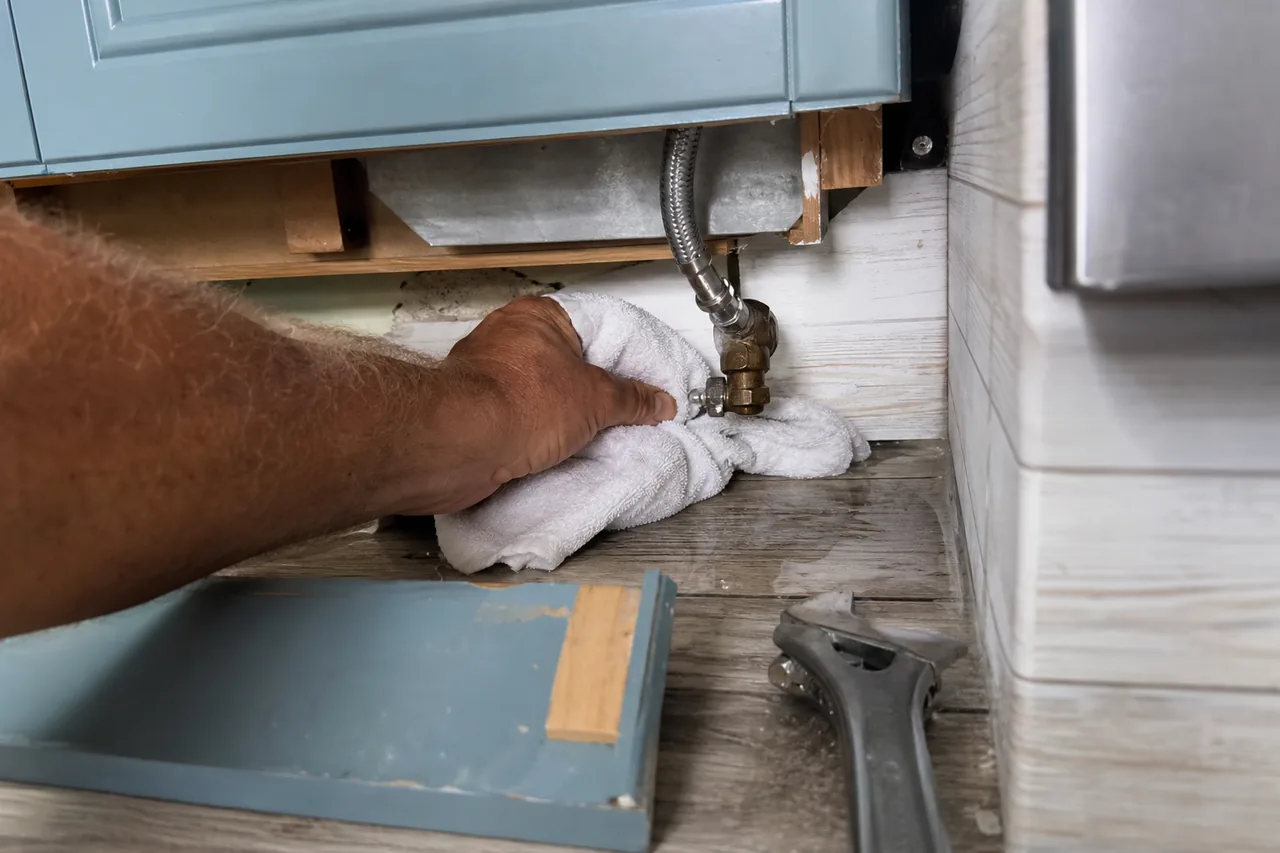
If a genuine filter is in, the dispenser has been flushed, the bin is clean and the ice still tastes wrong, look further back. A freezer running warm lets cubes soften and refreeze into clumps that hold odors. A slow ice maker leaves cubes sitting longer. A supply valve weeping behind the toe-kick can dampen the subfloor and give the whole cabinet run a musty smell, so pull the kick panel and look with a flashlight.
The diagnostic visit costs $80. When the real cause is a freezer fan or defrost fault, that repair typically falls in the $250–$640 range, with the firm figure given after diagnosis. The Viking refrigeration page covers the other symptoms that tend to travel with bad ice.